

No Bandwidth for Change: Malaysia Airlines Rebuilds Culture & Cohesion

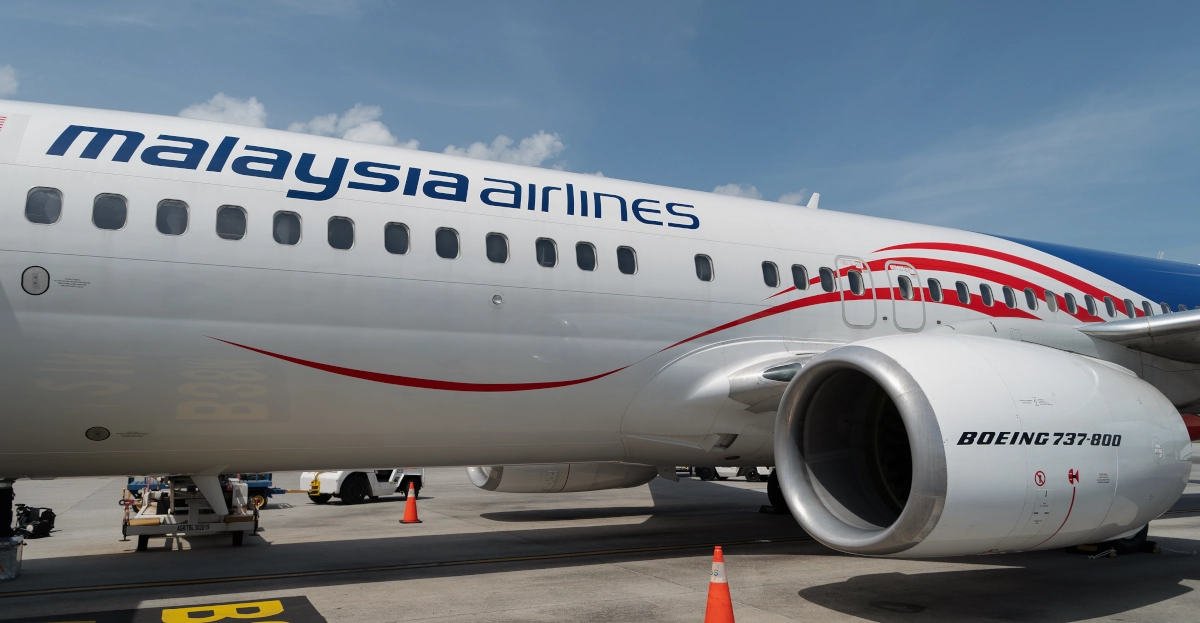
To turn the company’s finances around, Malaysia Airlines’ HR focused first on renovating its culture.
When Dato’ Mohd Khalis joined Malaysia Airline Berhad in 2018 as Group Chief Human Capital Officer, the organization wasn’t short on plans—it was short on belief.
The company had a new CEO. Captain Izham Ismail had no financial background when he was handpicked for the role a few months prior.
Years of disruption—financial strain, a government takeover and layoffs—had left the culture toxic and resistant to change. Employees were depleted, skeptical and stretched thin, and even well-designed transformation efforts were likely to stall under the weight of exhaustion.
To turn the company’s fortunes around, Khalis knew a cultural transformation had to take place.
“There were a lot of things that needed to be fixed in the organization: processes, equipment, even integrity issues here and there,” he said. “But you can't do that if you don't fix the morale of the people first. At that moment, they were a group of people who had given up hope.”
While the board and new CEO focused on financials, Khalis focused on building cohesion and a workforce that could come together and commit to the changes that needed to be made for the good of the company.
Eight years later, 2025 marked the company’s third consecutive year of net profit.
The challenge
Malaysia Airlines carried the weight of being a national symbol—and the scrutiny that comes with it. By the late 1990s and early 2000s, financial trouble had already become part of the airline’s operating reality, including a near-bankruptcy moment that led to significant government ownership. The next two decades brought a cycle of turnaround plans and uneven results. A profitable year would be followed by steep losses; a new leader would arrive, launch a reset, and then watch momentum stall in the face of cost pressure, competition, and political complexity.
Then, in 2014, Malaysia Airlines suffered two major disasters: the disappearance of MH370 and the downing of MH17. The airline was uniquely vulnerable in the aftermath because it was already battling financial difficulties. Public faith and internal morale took another direct hit at the same time the business was fighting to survive.
In the wake of those tragedies, the organization was not only grieving—it was destabilized. The share price dropped sharply, and doubts about the airline’s survival multiplied. Structural pressures mounted: high operating costs, fuel volatility, intense competition, political interference and powerful unions.
In 2015, the government nationalized the airline, buying out remaining minority shares and rebranding it as Malaysia Airlines Berhad (MAB). The reset came with sweeping internal consequences. The Malaysia Airlines Employees Union (MASEU)—a major force inside the company—was disbanded. The restructuring included a high-profile CEO retrenchment and nearly one-third of the workforce cut—about 6,000 jobs.
By the time Khalis arrived, he walked into the residue of all of it:
- A company that had been through “many transformations… and nothing worked.”
- A workforce dealing with transformation fatigue and cynicism—made worse by feeling publicly condemned while watching the government inject money into the carrier.
- Scarcity so extreme it became symbolic: Khalis recalled buying his own ream of paper to print.
The turnaround: restore cohesion before demanding change
Instead of leading with structural change, HR focused on rebuilding the emotional and cultural prerequisites for transformation. An exhausted workforce doesn’t adopt new ways of working; it protects itself.
In Malaysia Airlines’ case, the early work wasn’t about “rolling out agility.” It was about restoring enough belief, identity, and capability for employees to participate in a turnaround rather than brace against it.
Foster gratitude
One of Khalis’ earliest interventions was unconventional: he brought in a religious teacher to spend time with employees. While that was not unusual in the region, his instructions were different. He asked the teacher not to preach, but to listen, steady emotions, and reset perspective by encouraging reflection on gratitude.
“In many religions, the structure of the prayer is that before you ask anything from God, you praise and count your blessings,” Khalis said. First, you thank Him, then you ask.”
He explicitly instructed the teacher to be inclusive, engaging employees across backgrounds and beliefs. The intent was not religion; it was morale.
Gratitude became a foundation for cultural renewal. In demoralized organizations, employees often anchor on what has been lost—security, pride, colleagues, and certainty. Gratitude provided a counterweight: a reminder that employment still existed for many, that the airline still operated, and that survival was not guaranteed.
Khalis’ logic was practical. When people are consumed by bitterness or fear, they conserve energy and disengage. When they can reconnect to what remains—and to the possibility of rebuilding—they are more willing to commit effort. Gratitude created the conditions for commitment.
Build pride
After stabilizing the emotional temperature, HR turned to identity.
Khalis began opening town halls with the national anthem. The point wasn’t ceremony; it was reconnection. Many employees felt publicly condemned and privately defeated. The anthem reminded them of the meaning of serving as the national carrier.
“It reminded them you're part of the nation. That's why they own you. That’s what differentiates you from other airlines like AsiaAir,” Khalis said. “Your responsibilities go beyond just P&L. Suddenly they felt that purpose. That's why we are here.”
HR reinforced that message with a company song, created in partnership with a well-known songwriter--with no budget. The simplicity mattered. The airline’s workforce included strong subcultures and status boundaries; a shared song cut across role, rank, and function.
Pride served a second purpose: it shifted the perception that change was being done to& employees. Instead, the turnaround became something employees were doing for the airline. That shift—from compliance to ownership—is critical in organizations that have seen critical transformations fail before and stopped believing.
Develop people
Once emotional capacity and shared purpose began to return, HR focused on capability.
Employees were trained in more effective ways of working, including Lean- and Agile-style approaches and cross-functional problem-solving. The goal was to convert renewed energy into execution: clearer priorities, faster improvement cycles, stronger collaboration, and less reliance on heroics.
Development also reduced the perceived risk of change. In depleted environments, change feels like chaos. Capability turns change into a set of learnable practices.
The sequence—gratitude, pride, then development—helped convert a worn-down workforce into one capable of absorbing new expectations. It did not eliminate the difficulty of transformation, but it rebuilt the capacity required to attempt it without collapsing under fatigue.
The result
The turnaround work began showing up first in operational and people metrics—engagement, service quality, reliability—and later in financial performance.
As execution improved, leadership was able to move from “stabilization” language to a growth plan with measurable financial ambition.
- Operational and workforce indicators strengthened
- People engagement rose sharply from the earlier baseline to the later measurement period.
- Customer satisfaction improved and stayed elevated.
- Reliability improved (notably on-time performance).
- Net promoter score climbed from a low baseline to a strong positive level.
In December 2025, the company announced a five-year plan marking a shift from survival to performance, with a goal of nearly doubling revenue to more than RM24 billion by 2030.
Conclusion: Prepare the way for transformation
Malaysia Airlines’ experience underscores a critical lessons; transformation often fails before implementation because the organization is running on empty. Attempting change without rebuilding emotional bandwidth can backfire. It amplifies fatigue, deepens cynicism, and hardens resistance.
The more effective sequence is the one HR pursued here. Before a strategy reset can succeed, the culture must be restored. Only then can a workforce confidently and effectively execute new strategies to& transform and strengthen the company’s future.