

ADT’s Culture Renovation®: How CHRO Dave Scott Turned a Corporate Initiative into a Business Operating Model

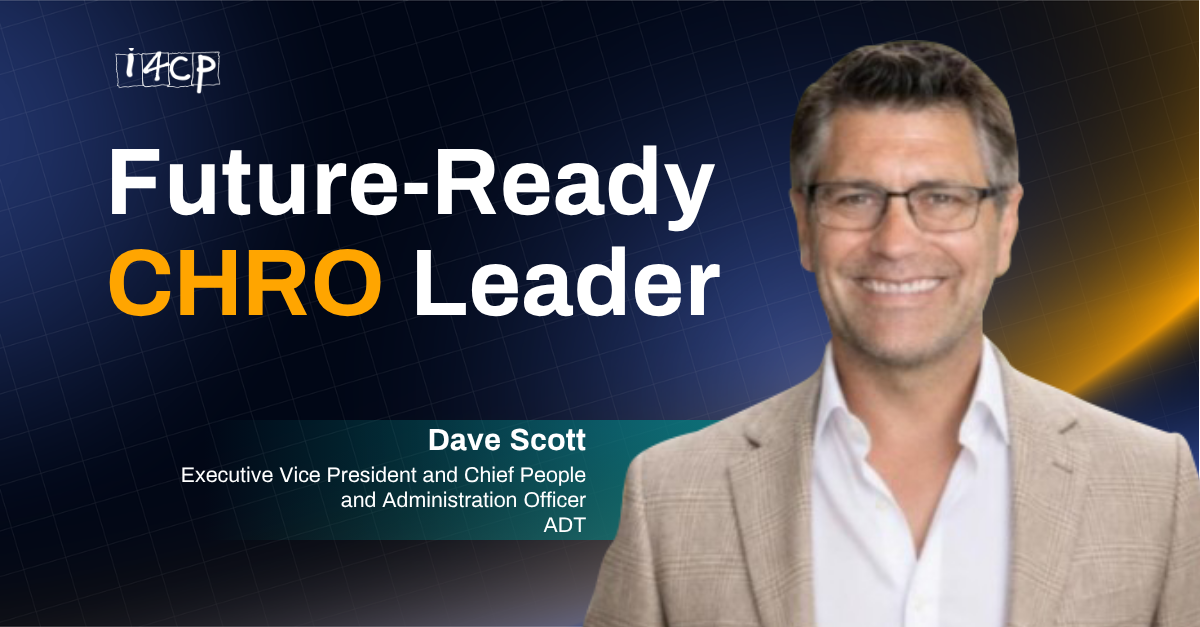
As part of i4cp’s commitment to helping organizations become future-ready, we’re initiating a series on Future-Ready CHROs. This series will feature heads of HR who are committed to creating a culture that fosters an agile workforce…a workforce which embraces—and even exploits—whatever the organization encounters in the future.
First up: ADT, a leading provider of smart home and business security solutions.
ADT’s Culture Renovation®: How CHRO Dave Scott Turned a Corporate Initiative into a Business Operating Model
When a current company’s name has the word “telegraph” in it, you know it has some history...but also a tremendous amount of agility and adaptability to endure through to today.
Originally founded as American District Telegraph, ADT has spent more than 150 years adapting to a changing world while staying true to its mission of protecting what matters most. ADT was founded in 1874 following a nighttime burglary that inspired a telegraph-based alert system for homes. Today ADT powers smart home platforms, AI‑enabled monitoring centers, and a workforce of more than 12,000 people serving six million households and businesses across the U.S.
While ADT has always leveraged the latest technology, Dave Scott, ADT’s Chief People and Administration Officer, told i4cp’s Next Practices Weekly audience that technology alone doesn’t sustain an organization’s success. Culture does.
When Scott originally arrived at ADT, culture was already a topic of conversation, but it lacked coherence and operational integration. His day‑one assignment was to change that.
“My boss, Chairman of the Board, President and CEO Jim DeVries, handed me a list of five priorities, and number one was to define our culture roadmap with intentionality,” Scott recalled. “I remember freezing for a moment. Here I was, walking into a 150-year-old company and being asked to help shape its culture. It was both humbling and daunting.”
One of the outside sources Scott turned to was i4cp, and the company’s extensive work on how to morph culture into a healthier, more productive environment. Leveraging i4cp’s ground-breaking Culture Renovation® research, Scott and his team began to diagnose the current state, identify gaps, and build a roadmap.
The turning point came when ADT stopped treating culture as a corporate initiative and started treating it as a business operating model. Culture was no longer something to communicate. It became a strategic capability embedded in how the company operated.
A Nonlinear Path to HR Leadership
Scott’s career path itself was agile and involved several pivots.
“I’ve had a chance to do a lot. I’ve been a professional clown, I worked at Chuck E. Cheese, I was a balloon artist,” he joked during the session. He later served in the U.S. Postal Inspection Service and the Coast Guard before entering HR through Walmart, where he spent two decades rising to lead major parts of the U.S. HR organization.
That robust and varied background shaped his leadership philosophy. “I realized I had a passion for this work, and a passion to lead an HR team,” he said. After serving as CHRO at Dish Network, Scott joined ADT nearly three years ago, taking on a broad portfolio that today includes HR, real estate, corporate security, investigations, environmental health and safety, and even facilities issues.
“If it comes to HR strategy, I’m the first phone call. If you have a light out in your workspace, I’m also the first phone call.”
Understanding ADT’s Legacy to Shape Its Future
Scott believes culture work must be grounded in organizational identity. ADT’s history provided a powerful anchor, and the legacy of connection and protection still defines the company.
“We’re backed by the world’s best 24x7 monitoring centers,” Scott noted. “We’ve got 12,000‑plus team members that stand on call to serve our subscribers on a daily basis.”
But serving such a diverse workforce—from field technicians starting their routes at 7 a.m. to monitoring center employees handling life‑threatening events—requires a culture that is real, relevant, and lived.
“This can’t be a binder. This can’t be a corporate‑led initiative,” Scott emphasized. “It has to matter to a technician or to an overnight monitoring center team member.”
The Power of Co-Creation
Given the organizational diversity, Scott realized that defining the culture roadmap the CEO requested needed to get embedded into the everyday workflow.
“We wanted to talk about how ADT evolved the culture from a corporate initiative into a business operating model.” That language resonated deeply with ADT’s CEO, executive team, and board because it connected culture directly to performance, customer experience, and strategic execution. But Scott knew he needed the buy-in of the entire organization if it was going to stick.
"It couldn't be an HR initiative. It had to be something to which the entire organization felt a level of ownership."
To do so, Scott created a “co-creation mentality” with the workforce and enlisted their help.
"Culture is built with the employees, not for the employees," Scott advised. "The team members built this product. And so, when it got reproduced, it was kind of like, 'Well, of course that's what our culture means.'"
As part of this effort, like many organizations who have successfully changed culture, Scott enlisted a team of “culture champions,” which consisted of influencers and energizers…employees throughout the organization who helped evangelize the culture efforts.
"Their job is to amplify it in their work and their language, and it helps connect us from the frontline to the executive leadership team."
Ultimately, ADT’s culture renovation centered on three principles:
1. Clarity of Purpose
ADT articulated a cultural identity called BLUE, rooted in protection, trust, and service. It was intentionally simple and actionable, with each letter representing a desired behavior: Bold, Lead, Unite, and Elevate. More importantly, the framework provided a common language for decision-making, leadership expectations, and day-to-day execution across the enterprise.
2. Consistency Across the Enterprise
Scott’s team ensured BLUE showed up in technician ride‑alongs, monitoring center workflows, leadership development, and frontline coaching. Culture became embedded in operating rhythms rather than episodic events.
3. Credibility Through Action
Employees needed to see leaders modeling the culture. Scott emphasized that culture must be “real enough to matter,” which meant removing barriers, improving tools, and aligning incentives.
The Role of Research and Community
Scott’s exposure to i4cp’s research on culture began at Next Practices Now, i4cp’s annual conference for HR leaders, where he talked with i4cp’s consulting team. That conversation led to deeper engagement, including culture diagnostics, executive briefings, and ongoing advisory support.
“It really also gave us the backing to say there's a science behind how we do this.”
Beyond the research, he credits the i4cp community with helping ADT accelerate its journey. “It led to a lot of the thoughts that we’ll talk about again here this morning,” he told the audience.
Leaders are using the BLUE framework to guide decisions, reinforce accountability, and align teams around common priorities. Technicians and monitoring center employees report a stronger connection to the company's mission and the role they play in delivering it. Culture is no longer viewed as an HR initiative. It has become part of ADT's operating vocabulary, and a foundational element of how the business executes its strategy.
The renovation also strengthened alignment across the executive team. As Marshall Bergmann, i4cp’s SVP of Consulting, noted during the session, the operating‑model framing “is language that resonates with your CEO, your executive team, your board.”
Scott’s approach demonstrates a core insight from i4cp’s research: culture renovation succeeds when it is leader‑led, employee‑owned, and operationally embedded.
Key Takeaways for HR Leaders
ADT’s journey offers several lessons for organizations seeking to renovate culture:
- Start with identity. A 152‑year legacy became a strategic asset, not a constraint.
- Make culture operational. Embed it in workflows, leadership behaviors, and frontline experiences.
- Use research to build credibility. Diagnostics and benchmarking helped ADT prioritize and sequence change.
- Ensure culture matters to every role. If it doesn’t resonate with the frontline just as much as it does with leadership, it won’t stick.
- Lead visibly. Scott’s broad remit allowed him to connect culture to real operational issues, from safety to facilities.
Becoming Future-Ready
ADT’s culture renovation is a model of how legacy organizations can evolve without losing their identity. By turning culture into a business operating model, Dave Scott and his team created a framework that strengthens performance, deepens employee connection, and helps ensure a 152-year-old company remains ready for whatever comes next.
This is culture work at its most practical and most human. And it is exactly the kind of culture adaptability i4cp research shows high‑performance organizations adopt to thrive in the future.
For more information on i4cp’s Culture Renovation® services, see i4cp Consulting Services - Culture Change Consultants.