

Interested in participating? Contact our team to discuss eligibility.
If you are an i4cp member, please log in to access the registration/meeting details.
Meeting Details
 Bookmarks:
Fireside Chat | The 100 Year Life
Reflections on Day 1 and Member Projects
Employees as AI Agent Builders
Fireside Chat | The 100 Year Life – Guest Speaker, Lynda Gratton
Recording | The 100 Year Life - Lynda Gratton (see Downloads for Slides - Living The 100 Year Life)
Framing the Future of Work: From Parent-Child to Adult-Adult Relationships: Lynda Gratton presented her research and perspective on the evolution of organizational relationships, emphasizing the shift from a parent-child dynamic to an adult-adult model, with members engaging in discussion about its implications for leadership, change management, and employee agency.
-
Parent-Child Versus Adult-Adult Model: Lynda explained the historical context of organizational relationships, describing the traditional parent-child model where the organization directs and nurtures employees, and contrasted it with the emerging adult-adult model based on mutual accountability, autonomy, and responsibility.
-
Implications for Change Management: Members questioned how the adult-adult model affects traditional change management, with Lynda clarifying that while change management remains relevant, the focus is shifting toward leaders as narrators and the need to foster personal agency across all employee segments, not just high performers.
-
Role of Leaders in the New Model: Discussion about the increasing importance of leadership development, particularly in helping leaders act as adults, manage stress, and provide narrative and direction in a more autonomous workforce.
-
Employee Expectations and Agency: Participants noted that many employees, especially those earlier in their careers, still expect organizations to guide their development, highlighting the need for a mindset shift on both sides to embrace greater autonomy and self-direction.
Generative AI and Individual Autonomy in the Workplace: Exploration of the impact of generative AI on work, emphasizing its role in amplifying individual capabilities and the necessity for employees to take personal responsibility for its use, with attendees contributing perspectives on change management, employee fears, and the evolving nature of work.
-
Bottom-Up Adoption of Generative AI: Lynda highlighted that generative AI is being adopted by employees independently, often outside formal IT strategies, and that organizations must recognize and adapt to this bottom-up dynamic rather than relying solely on top-down directives.
-
Amplification Versus Augmentation: The group discussed the distinction between AI as an amplifier of human uniqueness and productivity versus a tool for simple augmentation, with Lynda agreeing that the amplification framing empowers individuals and underscores their essential contributions.
-
Employee Fears and Future Self: Lynda noted that many employees are apprehensive about generative AI, fearing job loss and uncertainty about the future, and stressed the importance of helping employees envision and commit to their future selves to navigate these changes.
-
Change Management and Inspiration: Observation that traditional change management approaches are insufficient, and that organizations must now inspire individuals to recognize their unique roles and contributions in an AI-enhanced workplace.
The Weaving Model: Framework for Individual and Team Development: Lynda Gratton introduced her 'weaving' model for personal and professional growth, outlining four productivity and four nurture threads, and described forthcoming tools and resources to help individuals and teams assess and strengthen these areas, with attendees providing feedback and raising questions about application.
-
Weaving Model Overview: Lynda described the metaphor of weaving a life, where individuals intentionally strengthen different threads—mastery, knowing, cooperation, amplification (productivity), and friendship, intimacy, calm, adventure (nurture)—to build resilience and fulfillment in work and life.
-
Three Guiding Questions: She presented three guiding questions for individuals: 'Who am I?', 'How am I working now?', and 'What do I need to do next?', emphasizing the importance of narrative, identity, and making promises to one's future self.
-
Application to Teams and Tools in Development: Lynda announced the development of diagnostics, workbooks, journals, and team programs to help individuals and groups assess and strengthen their threads, inviting attendees to participate in pilot programs and provide feedback.
-
Friendship, Intimacy, and Connection at Work: The group discussed the increasing importance of workplace friendships and negotiated relationships, especially among younger employees, and the challenges of fostering connection and intimacy in hybrid or remote environments.
Opportunities for Collaboration and Participation in Research: Lynda invited attendees to join her in piloting and refining her forthcoming book and related tools, offering to share draft chapters and involve interested participants in a community to support adult-adult conversations and thriving teams.
-
Invitation to Collaborate: Lynda Gratton provided her contact information and encouraged attendees to email her for a book overview, select draft chapters, and opportunities to join a community focused on implementing the weaving model in organizations.
-
Next Steps and Timeline: She clarified that the book will be published in the following year, with supporting materials such as journals and diagnostics being developed in parallel and expressed interest in building momentum and gathering organizational input ahead of publication.
Follow-up tasks:
-
Book Collaboration and Feedback: Send an email to Lynda Gratton at lgratton@london.edu to request an overview of her upcoming book and select a chapter for review. If desired, indicate interest in joining the thriving team program community for potential collaboration and feedback on her book and related initiatives.
-
Resource Distribution for New Members: Obtain and distribute the latest version of "Leaders Make the Future: Human AI Augmentation" to the new people on the Future Work Board.

Reflections on Day 1 and Member Project Sharing
LINKS: Audio Recording | Reflections and Project Sharing
-
Reflections on Leadership, Autonomy, and Organizational Change: The group discussed challenges and opportunities in fostering autonomy, leadership narratives, and organizational change, referencing insights from previous sessions and external speakers such as Lynda.
-
AI Adoption, Amplification, and the 'AI First' Mindset: Transition to AI-first organizations, the importance of amplifying human strengths with AI, and the challenges of moving beyond incremental adoption, referencing both Microsoft’s internal initiatives and broader industry trends.
-
Microsoft’s 'Camp AIR' Immersive Transformation Program: Karen provided an in-depth overview of Microsoft’s 'Camp AIR' program, an immersive, team-based initiative designed to help organizations co-create their AI-first vision, clarify roles, and drive collective transformation.
-
HR’s Role in Organizational Transformation and AI Adoption: Examination of the challenges HR faces in leading transformation, the need for HR to become more disruptive, and the persistent perception of HR as a control function rather than a strategic partner.
-
Future Skills, Jobs, and the Role of AI in Workforce Evolution: Uncertainty around future job roles, the increasing importance of AI literacy and human-AI collaboration skills, and the need for scenario planning and curriculum development to prepare for ongoing disruption.
-
Methodologies for Change Management and Organizational Transformation: Methodologies for managing change velocity, the importance of immersive and co-creative approaches, and the need to balance fundamentals with innovation in the face of rapid disruption.
Follow-up tasks:
-
Sharing Microsoft’s Camp AIR Program Details: Summarize the Camp AIR (AI First) immersive program and provide an abridged, non-proprietary version to the group for reference. Arrange for Dan Lewis or a leader who has completed the Camp AIR program to present their experience and learnings at the next virtual meeting.
-
Identifying Non-Tech Company Case Studies: Identify and invite one or two non-tech companies that have successfully implemented AI-first transformations to share their experiences at the next virtual meeting.
-
Developing Board Point of View on Future Skills and Jobs: Co-create a point of view or guidance document for thei4CP board to help member organizations address questions about future skills and jobs in the age of AI, leveraging shared insights.
Employees as AI Agent Builders – Guest Speaker, Gleb Tsipursky
LINKS: Recording | Employees as AI Agent Builders – Gleb Tsipursky (see Downloads for Slides - Employees as AI Agent Builders)
AI-generated Meeting Notes:
-
Empowering HR Teams to Build No-Code AI Agents: Gleb Tsipursky led a session for HR and business leaders on enabling HR teams to build and deploy no-code and low-code AI agents using existing tech stacks, with examples from manufacturing and insurance sectors, and addressed common concerns about IT, compliance, and change management.
-
Case Study: AI-Driven Employee Focus Group Replacement: Gleb presented a manufacturing company case study where an HR-built AI agent replaced traditional focus groups by synthesizing employee personas from HR data and simulating responses to policy changes, significantly reducing time and effort while maintaining high fidelity to real employee input.
-
Case Study: Policy Advisor AI Agent for Insurance Claims: Gleb demonstrated a policy advisor AI agent built collaboratively by HR and claims teams at an insurance company (NCGOA), which analyzes policy documents and claim scenarios to assist adjusters, improving efficiency, accuracy, and employee learning while operating within Microsoft Copilot Studio and SharePoint.
-
HR Benefits Assistant AI Agent Implementation: Discussion about the design and deployment of HR benefits assistant chatbots, which answer common HR policy and benefits questions, deflecting a significant portion of inquiries from HR staff and reducing workload.
-
Guidance on Build vs. Buy Decisions for AI Tools: Members asked Gleb for advice on when to build custom AI agents versus buying off-the-shelf solutions; Gleb recommended building simple agents in-house to develop internal capacity and engagement and buying complex solutions when necessary.
-
AI Adoption, Change Management, and Future of Work: Throughout the session, Gleb and members discussed the importance of employee empowerment, change management, and building AI literacy to ensure successful adoption and future-proofing of HR and business functions.
-
Technical and Compliance Considerations for AI Agents: Participants raised questions about data privacy, GDPR, and technical integration; Gleb clarified that using enterprise versions of AI tools and keeping data within secure environments addresses these concerns.
-
Applications and Use Cases Beyond HR: Members and Gleb discussed broader applications of AI, including union negotiations, content creation, and coaching, highlighting the versatility of no-code AI tools across business functions.
Follow-up tasks:
-
Sharing AI Agent Building Examples: Share the example instructions and templates for building AI agents (such as the employee voice segmenter and policy advisor) with meeting participants for reference and potential cut-and-paste use.
-
Union Negotiation AI Use Case: Send information and potential best practices on using AI agents for union negotiations to interested participants, including a possible interview or follow-up if explored further. Stay close to developments in using AI for union negotiations and share any new practices or findings with the group.
-
Deflection Rate Metrics Clarification: Provide clarification and details on the metrics and calculation methods used for deflection rates in HR benefits assistant chatbots to interested participants.
-
AI Adoption Readiness Assessment Resource: Share the link and details for the AI Adoption Readiness Assessment tool on disasteravoidanceexperts.com with meeting participants for their own organizational evaluation.
-
Upcoming Book Notification: Notify meeting participants when the new book "Psychology of Generative AI Adoption to Work" is released and arrange a follow-up session if desired.

2026 FoW HR/AI Blueprinting
Links: Recording | 2026 FoW HR/AI Blueprinting Inputs
AI-generated Meeting Notes:
-
Impacts of AI on Career Models and Workforce Development: How AI is reshaping career models, the labor market, and the value of formal education versus experience, referencing recent research and industry trends.
-
Strategic Planning for 2026: Skills, Skilling, and HR Leadership: Interactive session to identify and prioritize key strategic topics for the 2026 blueprint, focusing on scaling skills, skilling at speed, and empowering HR business partners.
-
Learning Agility, Organizational Design, and the Role of AI: Importance of learning agility, the shift from focusing on static skills to dynamic skilling, and the integration of AI and organizational design to support continuous development and adaptability.
-
Practical Challenges in Talent Mobility and Validation: Operational challenges of talent mobility, including validating skills, managing self-reported data, and leveraging recruiters and AI tools to match employees to roles during organizational changes.
Follow-up tasks:
-
Meeting Dates for Next Year: Confirm and communicate the dates for next year's meetings to all participants.
-
Sharing Published Paper: Share the recently published paper on expertise upheaval and AI impacts with the group for further review.
-
WhatsApp Group Invitations: Send invitations to all participants for the WhatsApp group to ensure everyone is included.
-
Reflecting and Translating Discussion into Agenda: Reflect on the meeting discussion and propose how to translate it into actionable agendas for future meetings or session that creates value for the board and participants.

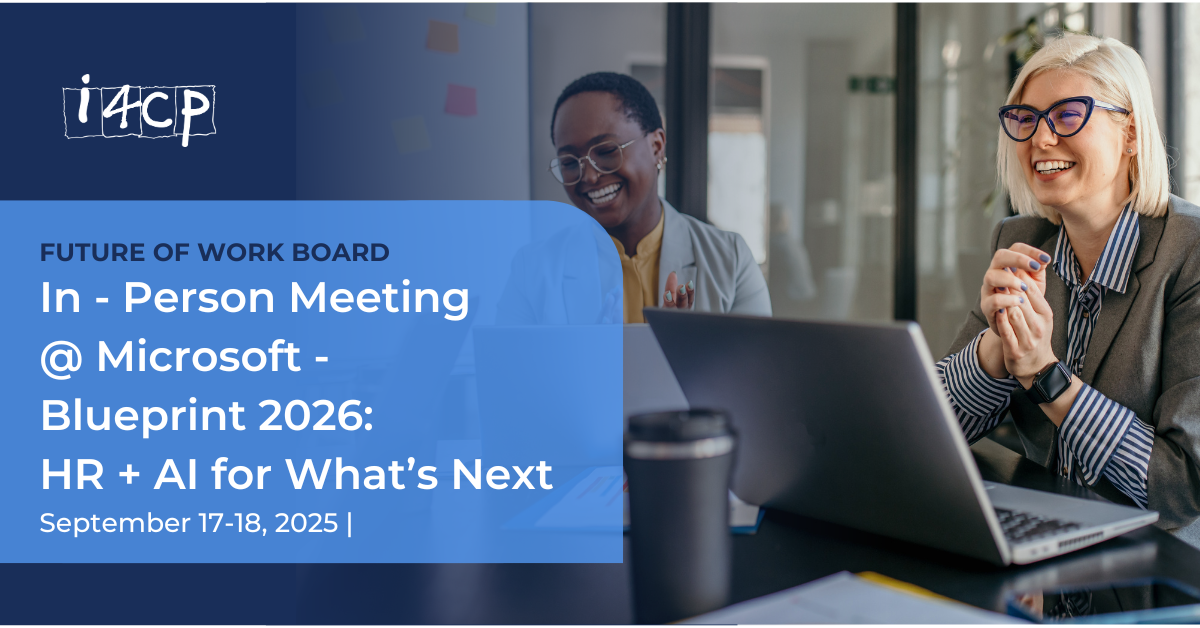
As AI continues to reshape the workplace, HR leaders must move quickly and think strategically. At our Fall in-person meeting, hosted at the Microsoft offices in Chicago, we developed a focused 2026 HR/AI blueprint, prioritizing what will create the greatest value for talent, technology, and transformation. Together, we explored how to embrace agile HR models, accelerate performance, and lead continuous change at scale.
Key topics included:
- Adopting an augmentation mindset to evolve HR leadership
- Scaling skills, performance, and growth with speed
- Empowering HRBPs through agentic AI capabilities
The meeting featured thought leader sessions with Lynda Gratton and Dr. Gleb Tsipursky, collaborative and group insight sharing sessions, and included dedicated time for board networking, including a group dinner.
