

Hilton’s Hospitality Mindset: Creating a Competitive Advantage Through Culture

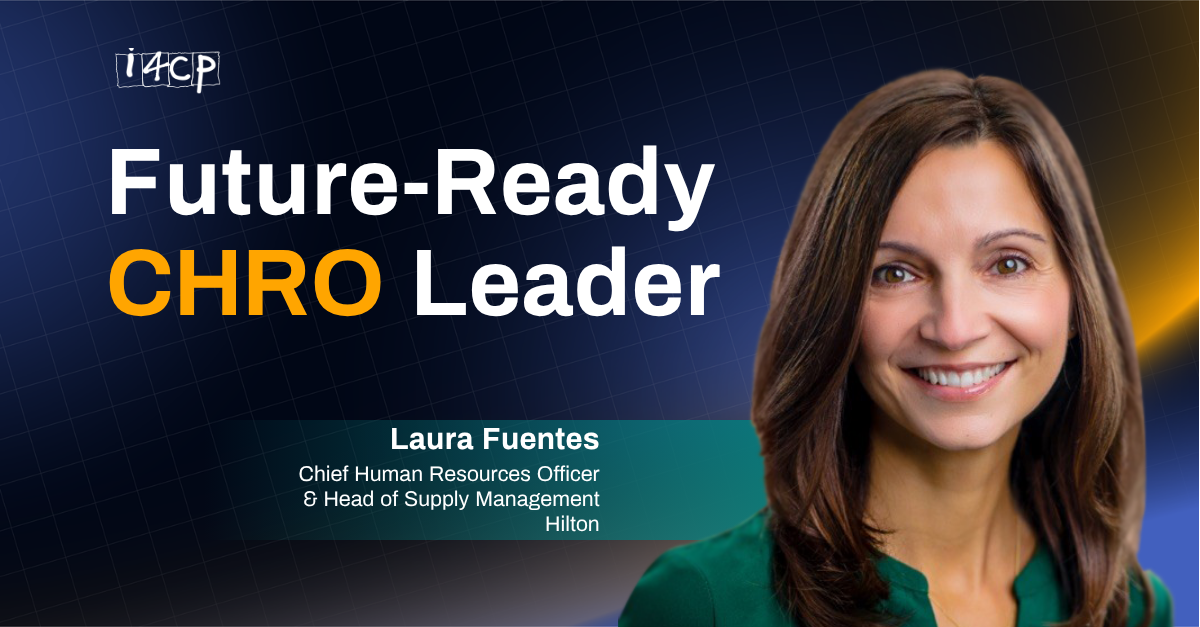
As part of i4cp’s commitment to helping organizations become future-ready, we’re continuing our series on Future-Ready CHROs…leaders who are creating cultures that prepare their people and organizations to thrive amid constant change.
A true trailblazer in this area is Hilton, one of the world’s most recognizable hospitality companies, and Laura Fuentes, Hilton’s Executive Vice President and Chief Human Resources Officer, who has helped shape one of the world’s most celebrated workplace cultures.
This past year the company was named the #1 World’s Best Workplace by Great Place to Work and Fortune (its second time in three years at the top), among many other accolades. In fact, Hilton is the first and only hospitality company to have reached #1 on both the Fortune U.S. and World's Best Workplace lists twice.
While Hilton’s journey to the world’s best workplace took several turns, Fuentes’ own career path has been anything but traditional. She began as a civil and structural engineer, earned an MBA, worked at McKinsey and Capital One, and eventually moved into HR through workforce analytics. After joining Hilton 13 years ago, she became CHRO in 2020, just as the COVID-19 pandemic brought the travel industry to a virtual standstill.
Today, Fuentes leads Hilton Supply Management in addition to her HR responsibilities and is preparing to move into a new role as Hilton’s Chief Brand Officer later this year. She also serves on the board of Chipotle and several other organizations.
But perhaps the most interesting part of her story is how she describes Hilton’s culture journey: not as a destination, but as an operating discipline that is continually renovated.
A Culture Built for Scale
Hilton is a complex organization and building a unified culture is an impressive accomplishment.
Founded more than 100 years ago by Conrad Hilton, the company today operates over 9,400 properties across more than 144 countries and territories, spanning 28 brands. More than 500,000 team members work under the Hilton flags, although more than half are employees of Hilton’s franchise partners.
Like most franchise structures, creating a unified culture can be a challenge since Hilton doesn’t control some aspects of employment practices across its franchise network. At the same time, the guest expects the Hilton experience to be consistent regardless of who technically employs the person delivering it.
“Anything we put out from a culture perspective, our owners have to be on board, and it has to deliver an ROI for them because we are shepherding their resources and their investments. So we want to be really wise stewards of that,” Fuentes explained.
That means culture has to be carefully curated, and it has to simultaneously create value for team members, owners, guests, and the business. Hilton’s culture aims to ensure team members feel connected to something larger than themselves. Fuentes says the organization then spent years systematically working toward that ambition.
The result is a culture that has become one of Hilton’s most recognized competitive strengths. But Fuentes is quick to emphasize that HR didn’t create it alone.
Fueled By Your Feedback
For HR leaders, one of the most important lessons from Hilton’s journey is deceptively simple:
HR alone doesn’t build great culture.
“HR can be the architects, and we can put together the scaffolding,” Fuentes said. “But culture is what our team members experience every single day.”
Hilton spent years using employee feedback and external benchmarking to understand where the experience was falling short. Fuentes recalls that when she first joined the company, Hilton was receiving good, but not great, results from its employee surveys and Great Place to Work benchmarking.
For roughly six years, the company wasn’t making the lists it wanted to be on.
Rather than dismissing the data, Hilton used it as a roadmap. The organization addressed specific gaps in programs and benefits but discovered that programs alone weren't enough. Leaders had to understand and embrace them, encourage employees to use them, and be held accountable for creating the experience Hilton wanted.
“We didn't want to just be the best in hospitality,” said Fuentes. “We wanted to be the best employer, full stop.”
One particularly effective tactic was remarkably simple: when Hilton changed its team member travel program based on employee feedback, communications from the CEO and Fuentes carried a visual stamp which said, “fueled by your feedback.”
Employees could see that their voice had led to an actual change, ultimately creating a virtuous cycle: listen, act, communicate, and then listen again.
As part of this cycle, Fuentes believes there are two responsibilities at the heart of building great cultures: listening and storytelling. She calls HR leaders (and more broadly, organizational leaders) the “Chief Listening Officers” and “Chief Storytelling Officers.”
Listening happens at scale through surveys, but it also happens one-on-one. Some of Hilton’s most impactful programs have emerged from individual conversations with team members, and the power of storytelling is what made those experiences visible.
Those stories are relayed through town halls, digital communications, messages to general managers, and even physical spaces in its hotels. For Fuentes though, storytelling isn’t limited to a polished corporate communication. It is the accumulation of small moments in which leaders inspire people, recognize them, connect them to the mission, and help them see themselves as part of something larger.
“It's all these micro-moments where you inspire someone through your words and the shared experience of your team members,” said Fuentes.
That matters because Hilton’s culture is ultimately tied to a larger purpose:
“To fill the earth with the light and warmth of hospitality.”
As one of the most concise, memorable, and unique vision statements in the global hospitality industry, it draws from the writings of Conrad Hilton. Fuentes sees that vision statement as a powerful connection between individual work, the company, its communities, and society.
From “Great Place to Work” to “Great Place to Stay”
Hilton has also been deliberate about connecting culture to business strategy.
“Our culture and HR strategy is literally based on the four pillars of our business strategy, which have been constant for the last 15 plus years,” Fuente observed. “And we look to HR to expand our culture, to drive success with our customers, to grow our network and drive performance. Everything that we do ties to those strategic pillars.”
The company tracks outcomes such as turnover, engagement, productivity, reputation, usage, and cost. That discipline has led Hilton to think about its ambition in a slightly different way.
It wants to be not only the best place to work, but also the best place to stay.
And that connection is important. Employee experience and guest experience are not separate agendas…culture plays a huge part in how the business delivers its brand promise. Talent practices, leadership behaviors, and day-to-day employee habits directly influence the guest experience Hilton promises.
Fuentes moving from CHRO to Chief Brand Officer is maybe one of the best visible representations of this important bond.
A Hospitality Mindset Can Work in Any Industry
That idea comes through particularly clearly in Hilton’s inaugural workplace culture trends report: The Hospitality Mindset: A New Blueprint for Culture and Performance for Any Industry, which applies principles traditionally associated with guest hospitality to the workplace.
Fuentes says Hilton wanted the report to be useful beyond hospitality, to identify trends that were both timely and timeless. The company also commissioned independent research that found consumers pay more attention to brands that treat employees well and are more willing to pay more for and recommend brands known for treating their employees well.
The report identifies five shifts shaping the workplace:
- Mutual mentorship - moving beyond traditional top-down mentoring toward 360-degree learning, where an intern and CEO can learn from one another.
- RTO (Return to opportunity) - reframing the return-to-office debate around the value of in-person connection, community, learning, and relationships.
- AI anxiety to AI agency - helping employees move from fearing AI to feeling empowered to use it.
- The Chief Host Officer - applying the principles of great hospitality to leadership: anticipating needs and helping people feel seen, welcomed, and valued.
- The meaning multiplier - connecting people to a purpose larger than themselves, creating a cycle of greater engagement, innovation, and performance.
The “Chief Host Officer” concept may be the most distinctly Hilton idea of the five. A great host anticipates what guests need, creates an environment where they feel welcome, and pays attention to the details that shape their experience. Fuentes believes great leaders should do the same for their employees.
Learning Out Loud
Hilton is also applying the Chief Host Officer mindset to one of the biggest cultural challenges facing organizations today: effectively leveraging artificial intelligence.
Rather than beginning with mandates, Fuentes says Hilton first worked to understand how AI was already being used across the organization and where the business could benefit from AI.
The company identified three primary opportunities: improving the guest experience and personalization at scale, creating new forms of distribution and “agentic commerce,” and improving efficiency and productivity in the back office.
From there, Hilton launched AI learning curriculums designed for different levels of fluency, established governance around enterprise tools, and used storytelling and recognition to encourage experimentation.
One particularly interesting example was an internal AI summit where employees shared their early use cases in three-minute presentations. The goal wasn’t to transform Hilton’s AI strategy in one afternoon. It was to create a culture of “learning out loud.”
And there is solid evidence that the approach is working but despite the improvement, Fuentes knows there is still work to do.
“We don’t have certainty,” she said. But leaders can provide clarity, context, and a willingness to acknowledge what they know, what they don’t know, and what they are learning. That may be one of the most important cultural capabilities an organization can build in an era of rapid technological change.
The Power of Visibility
When asked what distinguishes Hilton’s best leaders, Fuentes returned to principles rooted in the words of founder Conrad Hilton. Great leaders, she said, do three things:
“ Dream big. Inspire others. Make it happen.”
Dreaming big provides inspirational vision. Inspiring others creates followership. And making it happen means delivering results.
Fuentes has seen those behaviors repeatedly in Hilton’s general managers around the world, including leaders operating through war, natural disasters, economic uncertainty, and political instability. The behaviors are intentionally simple enough to become common language across the organization.
And visibility matters.
Fuentes points to one practical behavior that great Hilton GMs consistently demonstrate: walk the floor. Don’t hide in the office. Get to know your people. Listen to them. Find their stories. Then use those stories to inspire others.
She offered a powerful example from a trip to Portugal, where a Hilton team member approached her after a town hall and shared a deeply personal experience involving a devastating loss. He also explained where Hilton had fallen short in supporting him.
Fuentes listened.
Then she took the story back to her team, which worked with the employee to develop a new program called Crisis Concierge, now available to support team members facing similar circumstances.
The program has helped dozens of employees. But Fuentes believes its cultural impact is much larger.
“Maybe 150 have used this program,” she said. “But guess what? 500,000 believe in our culture because we did this.”
That is the essence of the Hilton approach: listening becomes action; action becomes a story; the story creates meaning; and meaning strengthens culture.
The Journey Never Ends
Perhaps the most important revelation from Hilton’s culture journey is that the company doesn’t consider the journey finished.
Fuentes emphasizes that culture has to keep evolving, undergoing continuous renovation as the environment changes. The same organization that spent years pursuing excellence in its employee experience is now asking what that culture needs to look like in the age of AI.
Her advice to HR leaders is equally relevant. Stop assuming you have all the answers. Instead, ask better questions.
“The future belongs to the curious,” Fuentes said.
That means being willing to sit with uncertainty, challenge assumptions, and resist becoming too comfortable with the way things are.
At the same time, she believes organizations should double down on what makes them distinctive, particularly the human elements that technology cannot easily replicate.
“What is your unique contribution to the world in this moment?” she asks. “And figure out what is your promise to your people.”
When those two things come together, she believes performance and profits follow.
Key Takeaways for HR Leaders
Hilton’s experience offers several lessons for organizations seeking to build a future-ready culture:
- Start with a big ambition. Hilton’s culture journey began with a clear aspiration to create an extraordinary, unified culture, not simply to improve engagement scores.
- Make culture everyone’s job. HR can architect the experience, but leaders create it through their everyday behaviors.
- Listen, then act. Employee listening only builds trust when people can see what changed because they spoke up.
- Turn culture into common language. Simple but catchy concepts such as “Chief Host Officer,” “meaning multiplier,” and “dream big, inspire others, make it happen” give leaders language they can remember and use consistently.
- Connect culture to business performance. Hilton evaluates people initiatives through the same lens it applies elsewhere in the business: value, scalability, strategic alignment, and measurable impact.
- Use storytelling as an operating mechanism. Stories make strategy and culture relatable and memorable…and allow employees to see themselves as part of both.
- Create AI agency, not just AI governance. Training, experimentation, recognition, and transparency can help employees move from anxiety toward empowerment.
- Keep renovating. Even a highly recognized culture cannot stand still. New technologies, new generations of workers, and changing business conditions require constant adaptation.
Hilton’s culture journey demonstrates that hospitality is more than a customer-service philosophy. It can become a leadership model, a talent strategy, a brand strategy, and ultimately a business strategy.
For Fuentes, the goal is not simply to create a great place to work.
It is to create an organization where people believe they are part of something meaningful, where leaders take responsibility for the experience they create, and where culture helps the business perform today while preparing its people for whatever comes next.
As she put it near the end of our conversation: “Double down on the humans, and double down on your differentiators.”
That may be one of the simplest - and most powerful - formulas for becoming future-ready.